Wellbeing Hub
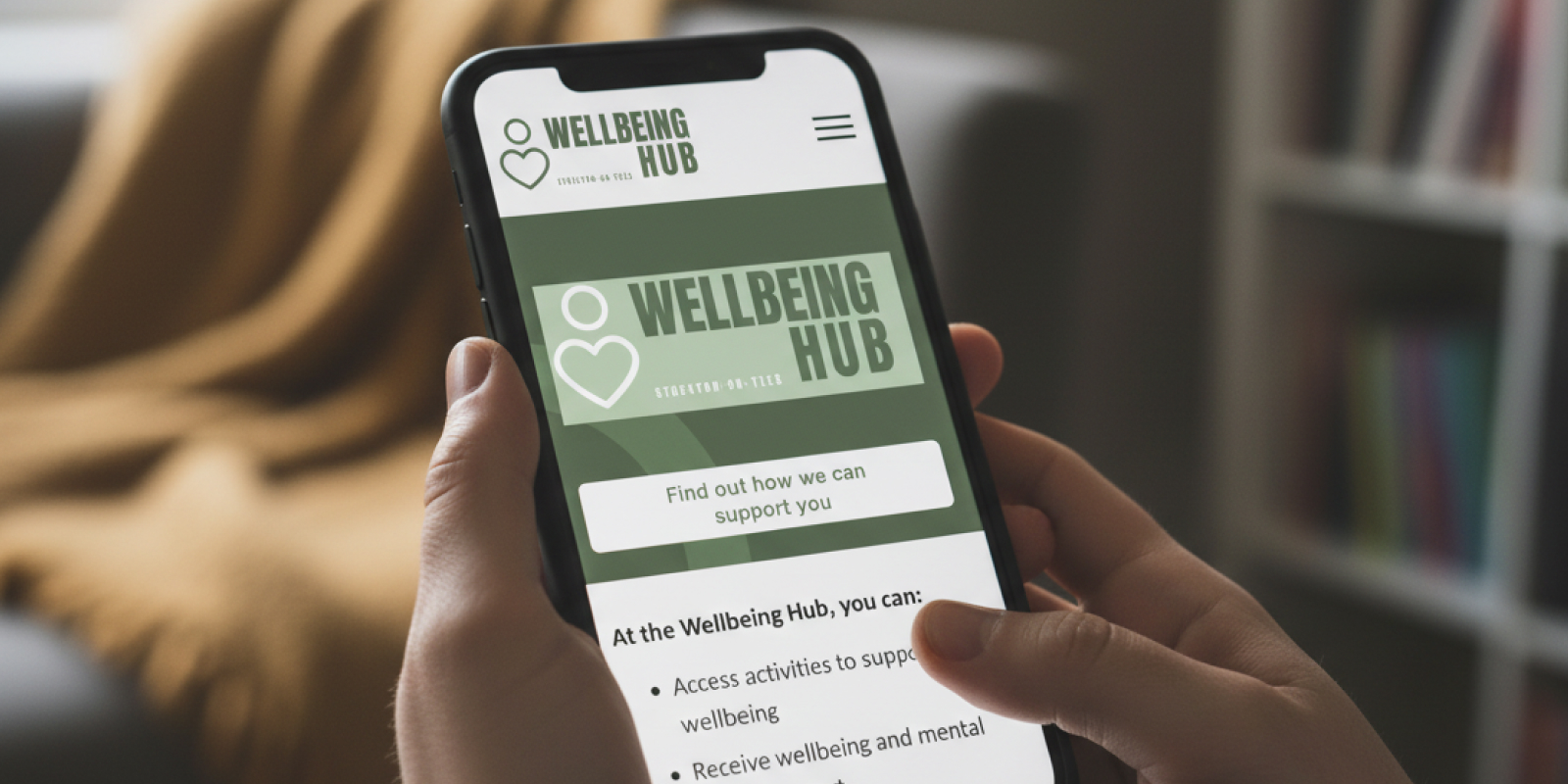
A fully accessible digital platform bringing together mental health and wellbeing support services for the community, designed with user needs and accessibility at its core.
Client
Community organisation in Stockton
Challenge
Creating an accessible platform for mental health support services with easy content management
Solution
User-centred, WCAG AA compliant website with intuitive CMS
Impact
Accessible hub serving the community with ongoing support and resources
Situation
I was approached by an organisation in Stockton that was looking to create a website for their Wellbeing Hub, a space where people can access support and activities aimed at improving their health and wellbeing.
The project was a collaborative effort involving several stakeholders, including Catalyst, NHS, Stockton Council, Citizens Advice, Change Grow Live, and Impact on Teesside. Each partner brought their own expertise and services to the hub, creating a comprehensive support network for the local community.
The primary goal was to develop a user-friendly, accessible website that would serve the needs of the community. However, one of the main challenges was identifying the right platform that could accommodate the required functionality while being easy for the team to manage. The website needed to be a living resource that the Wellbeing Hub team could update regularly without requiring technical expertise.
Task
My role in this project was to design, develop, and implement the website. I was solely responsible for these aspects, while I collaborated with the Wellbeing Hub team on the content.
The task also included ensuring the site met accessibility standards and adhered to brand guidelines. It was crucial to build and maintain a site that allowed the team to easily update and manage the content without ongoing technical support.
Additionally, I was responsible for delivering training on using the CMS and ensuring digital accessibility. I'm also in the process of organising cyber security training for the team to ensure they could manage the website safely and confidently in the long term.
Action
To begin, I conducted desk research and semi-structured interviews with individuals who had previously accessed wellbeing support. These insights were crucial in shaping the user-centred design of the website, ensuring it would meet the real needs of people seeking mental health and wellbeing services.
I attended stakeholder meetings to share initial ideas and emphasise the importance of accessibility and ease of use. These sessions helped align everyone's expectations and ensured that accessibility was understood as a core requirement, not an optional feature.
After evaluating various platforms, I selected Squarespace as it offered the necessary functionality and was easy for the team to use. The platform provided an intuitive content management system that would empower the Wellbeing Hub team to maintain the site independently, reducing long-term dependency on technical support.
During the development phase, I ensured the website adhered to WCAG AA compliance standards. This involved careful attention to colour contrast, keyboard navigation, screen reader compatibility, and clear content structure. I adopted a mobile-first approach, prioritising accessibility on mobile devices, given that a significant portion of users would be accessing wellbeing support information on their phones.
Throughout the build, I worked closely with the Wellbeing Hub team to ensure the content was clear, supportive, and accessible. This collaborative approach meant the website truly reflected the needs and values of all the partner organisations involved.
Result
The Wellbeing Hub website successfully launched as an accessible, user-friendly platform that serves the Stockton community. The site provides clear pathways to mental health and wellbeing support, making it easier for people to find the help they need when they need it.
By meeting WCAG AA compliance standards, the website ensures that people with disabilities can access vital support services without barriers. The mobile-first design approach means that users can access information and support from wherever they are, removing another potential obstacle to seeking help.
The Wellbeing Hub team received comprehensive training on the CMS and can now confidently update content, add new resources, and manage the website independently. This sustainability was a key objective from the start, ensuring the platform could grow and evolve with the community's needs.
The collaborative approach brought together multiple partner organisations under one accessible digital roof, creating a unified hub where previously fragmented services can be discovered and accessed. This integration has strengthened the support network available to the community and improved the visibility of mental health and wellbeing services in the area.
The project demonstrated that with careful planning, user research, and a commitment to accessibility, it's possible to create a digital platform that genuinely serves vulnerable communities. The Wellbeing Hub continues to operate as a vital resource, connecting people with the support services that can make a real difference to their lives.
"Jamie listened and asked questions about the project and used his expert knowledge and experience to advise us on the best outcomes and to develop our webpage together.
Jamie was polite, professional and friendly throughout and I can't thank him enough for all of the support and work he has created for this – the feedback from people using the website is that it is easy to navigate, clear and looks good.
Thank you Jamie for all of your hard work and for being so great with us and our requirements."
Sarah Jones, Wellbeing Hub
Ready to build something that connects with your audience?
We'd love to help you create digital tools that drive real engagement and business results.
Get in touch